How Can I Lower My Summer Cooling Bills Without Sacrificing Comfort?
When summer temperatures and humidity settle into southeastern Wisconsin, your air conditioner can quickly become one of the biggest energy users in your home. Turning the thermostat up might lower your electric bill, but nobody wants to spend July and August feeling uncomfortable in their own house.
Fortunately, reducing your cooling costs doesn’t have to mean living in a hot home. A combination of smart thermostat settings, routine AC maintenance, improved airflow, and a few changes around the house can help you stay comfortable while using less energy.
Here are some of the best ways homeowners in Menomonee Falls, Brookfield and southeastern Wisconsin can lower summer cooling bills without sacrificing comfort.

Here are some of the best ways homeowners in Menomonee Falls, Brookfield and southeastern Wisconsin can lower summer cooling bills without sacrificing comfort.
1. Find the Right Thermostat Temperature
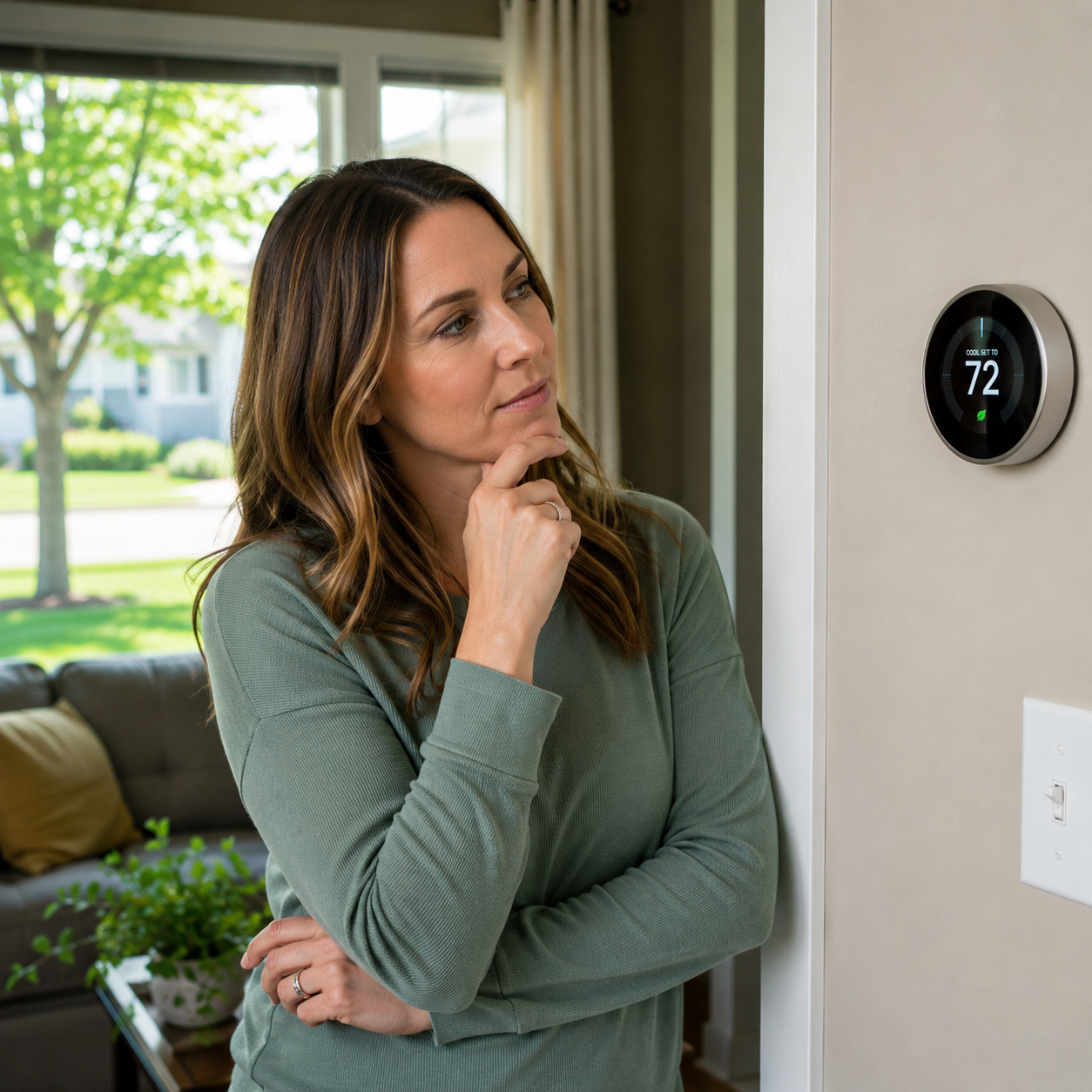
There isn't one perfect thermostat setting for every home. Instead, look for the highest temperature at which your family still feels comfortable. Even a small adjustment can reduce how frequently your air conditioner needs to run. If you normally keep your home at 70°F, for example, try gradually increasing the temperature by a degree or two and see how it feels. A programmable or smart thermostat can make this even easier by automatically adjusting temperatures while you're sleeping or away from home.
The key is avoiding extreme temperature changes. Turning your thermostat way down when you get home won't cool the house faster—it simply tells your AC to keep running until it reaches that lower temperature.
2. Use Ceiling Fans to Feel Cooler
Ceiling fans don't actually lower the temperature in a room, but the moving air can make you feel considerably cooler. That means you may be comfortable with your thermostat set slightly higher while using less air conditioning. During the summer, most ceiling fans should rotate counterclockwise when viewed from below. This pushes air downward and creates a cooling breeze.
Just remember to turn fans off when you leave the room. Fans cool people, not empty rooms.
3. Replace Your HVAC Filter Regularly
A dirty air filter restricts airflow through your HVAC system. When airflow becomes restricted, your air conditioner may have to work harder and longer to keep your home comfortable. Check your filter regularly during cooling season and replace it when it becomes dirty. Homes with pets, allergies, remodeling dust, or heavy HVAC use may need filter changes more frequently.
Maintaining proper airflow can help improve comfort while reducing unnecessary strain on your cooling equipment.
4. Schedule Regular AC Maintenance
Preventive maintenance is one of the simplest ways to help an air conditioner operate efficiently. During a professional AC tune-up, an HVAC technician can inspect the system, clean important components, check refrigerant-related performance, examine electrical connections, and identify developing problems before they become major repairs. A well-maintained cooling system generally has a much easier time keeping up with hot Wisconsin summer weather than one that has been neglected for several seasons.
Maintenance can also help catch efficiency problems that might otherwise quietly increase your electric bill.
5. Keep Your Outdoor AC Unit Clear
Your outdoor condenser needs adequate airflow to release heat from your home. Grass clippings, weeds, leaves, cottonwood debris, and other vegetation can accumulate around the unit and interfere with airflow. Keep the surrounding area clear and avoid placing landscaping, furniture, or other objects too close to the condenser. Never cover the outdoor unit while the air conditioner is operating.
If the condenser coil itself is heavily clogged or dirty, have it properly cleaned rather than risking damage to the coil.
6. Keep Blinds and Curtains Closed During Peak Sunlight
Windows can introduce a surprising amount of heat into your home, particularly those receiving direct afternoon sunlight. Closing blinds, shades, or curtains during the hottest part of the day can reduce solar heat gain and make it easier for your AC to maintain the desired temperature.
Blackout curtains, insulated shades, and other energy-efficient window treatments can be particularly useful in rooms that consistently become warmer than the rest of the house.
7. Don't Block Your Supply or Return Vents
Take a quick walk around your house and check your HVAC vents. Furniture, rugs, curtains, boxes, and other household items can accidentally block supply or return vents. Restricted airflow can create hot and cold spots and interfere with the HVAC system's ability to circulate conditioned air properly. Keeping vents open and unobstructed helps your system distribute cool air throughout the house.
If certain rooms remain significantly warmer even with clear vents, there may be an airflow, ductwork, insulation, or HVAC system issue worth investigating.
8. Reduce Heat-Producing Activities During the Afternoon
Your air conditioner isn't just fighting the outdoor temperature. It's also removing heat generated inside your home. Ovens, clothes dryers, dishwashers, and other appliances can add heat and humidity during the hottest portion of the day. When practical, consider grilling outdoors, using smaller cooking appliances, running the dishwasher later in the evening, or doing laundry during cooler parts of the day.
These aren't huge changes individually, but together they can reduce the cooling load on your home.
9. Check for Air Leaks Around the House
Cooling your home becomes more expensive when conditioned air escapes and warm, humid outdoor air finds its way inside. Common trouble spots include:
- Windows and exterior doors
- Attic access points
- Poorly sealed ductwork
- Gaps around plumbing and electrical penetrations
- Older or damaged weatherstripping
Sealing air leaks can improve both comfort and energy efficiency. It can also reduce the humid, sticky feeling that sometimes causes homeowners to lower their thermostats even further.
10. Pay Attention to Indoor Humidity
Wisconsin summers aren't just hot, they can also be humid. High indoor humidity makes a home feel warmer, which can lead you to turn down the thermostat even when the actual indoor temperature isn't particularly high. Your air conditioner should remove some moisture as it operates. If your house consistently feels muggy or clammy, however, the problem could involve your AC system, oversized equipment, airflow, ductwork, home infiltration, or another humidity-related issue.
Addressing the underlying humidity problem can sometimes make a home feel noticeably more comfortable without lowering the thermostat.
11. Don't Ignore an AC That's Running Constantly
Your air conditioner will naturally run longer during very hot weather. But if it suddenly seems to run nearly nonstop, struggles to reach the thermostat setting, or your energy bill jumps without an obvious explanation, something may be wrong. Possible causes include dirty components, airflow restrictions, refrigerant-related problems, duct leakage, aging equipment, or other mechanical issues.
A cooling system doesn't necessarily have to stop working completely to need service. Declining efficiency is often one of the first signs that something isn't operating properly.
12. Consider the Efficiency of an Older Air Conditioner
Even with excellent maintenance, air conditioners don't last forever. If your system is older, requires frequent repairs, struggles to keep your home comfortable, or causes unusually high summer electric bills, it may be worth comparing repair costs with the potential benefits of a newer system. Today's properly sized, higher-efficiency air conditioning systems can provide better temperature control while using less electricity than many older units.
Replacement isn't automatically the right answer, though. A trustworthy HVAC contractor should evaluate your existing equipment and help you determine whether repairing or replacing it makes the most financial sense.